
Why a journal
Tracking a FTMO
account.
The FTMO Challenge is won or lost on discipline: a 10% profit target, a 5% daily loss limit that resets at midnight CE(S)T, and a 10% maximum loss that never moves. FTMO's own MetriX dashboard tells you where you stand today. It does not show you the patterns — which session you give money back in, which pair you overtrade, what a losing streak does to your position sizes.
A journal does. Import your FTMO trades into FreeTradeJournal and you get daily P&L against the limit, win rate by pair and session, an equity curve against the loss floor, and written notes tied to the trades that mattered.
The free plan covers it: unlimited logging, CSV import, analytics, and a prop firm tracker. Here are the current FTMO rules and exactly how to get your trades in.

FTMO at a glance
- Account sizes
- $10K, $25K, $50K, $100K, $200K
- 2-Step targets
- 10% in the Challenge phase, 5% in Verification; no target on the funded account
- Daily loss limit
- 5% on the 2-Step (3% on the 1-Step), equity-based, resetting at midnight CE(S)T
- Maximum loss
- 2-Step: 10% static from initial balance. 1-Step: 10% trailing end-of-day, locking at breakeven once it reaches the initial balance
- Profit split
- 90% from the start on the 1-Step; 80% on the 2-Step, rising to 90% via the Scaling Plan
Rules verified 10 August 2026. Full table below.
The rules
What FTMO
makes you track.
| Account sizes | $10K, $25K, $50K, $100K, $200K |
| 2-Step targets | 10% in the Challenge phase, 5% in Verification; no target on the funded account |
| 1-Step target | 10% in a single phase |
| Daily loss limit | 5% on the 2-Step (3% on the 1-Step), equity-based, resetting at midnight CE(S)T |
| Maximum loss | 2-Step: 10% static from initial balance. 1-Step: 10% trailing end-of-day, locking at breakeven once it reaches the initial balance |
| Consistency rule | 1-Step only: your best day may not be more than 50% of your total positive days' profit. No consistency rule on the 2-Step |
| Minimum trading days | 4 per phase on the 2-Step; effectively 2 on the 1-Step |
| Profit split | 90% from the start on the 1-Step; 80% on the 2-Step, rising to 90% via the Scaling Plan |
| Payouts | On demand from day 14 after your first funded trade; processed in 1-2 business days; challenge fee refunded with the first payout |
| Platforms | MT5, MT4, cTrader |
Rules verified against ftmo.com on 10 August 2026. FTMO adjusts its programs over time — check ftmo.com for the current objectives on your account type.
How FreeTradeJournal helps
Every rule,
tracked for you.
Daily P&L against the 5% limit
The dashboard shows each day's net result, so you can see how close a session came to the daily loss line and which days of the week eat your buffer.
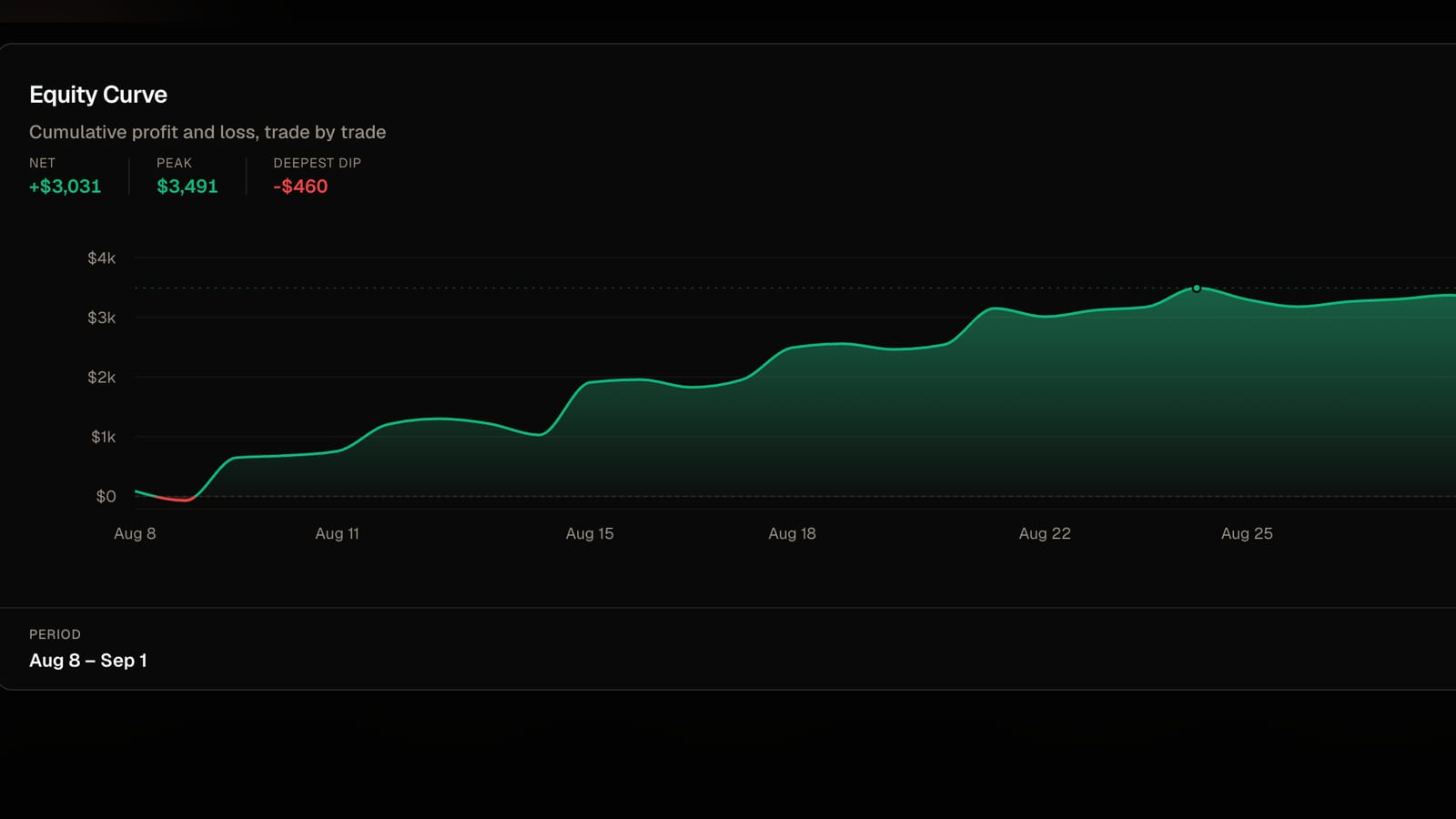
Equity curve against the loss floor
The 2-Step max loss is static at 10% below the initial balance. Watch your equity curve against it instead of doing mid-trade arithmetic — and on the 1-Step, note your end-of-day highs, since the floor trails them.
Progress to the profit target
Set the 10% target as a goal. On a $100K Challenge that is $10,000 — the goal tracker shows what each trading day contributed and how many days like your average you still need.
Best-day share for the 1-Step
The 1-Step Best Day Rule caps any single day at half your total profit. The daily breakdown makes it obvious when one big day is carrying your challenge.
The true cost of your challenges
PropTracker logs challenge fees, resets, and payouts, so you know your all-time net with FTMO across every attempt — not just the account that is currently open.
A record of the bad days
Journal entries with emotion tags tie your notes to actual trades, so a failed challenge becomes something you can study instead of repeat.
Getting your trades in
Import from
MT5 or cTrader.
FTMO runs on MT5, MT4, and cTrader. Both main platforms export your history in about a minute:
MT5: open the Toolbox panel (View menu, or Ctrl+T) and switch to the History tab.
MT5: right-click the history list, set the period (for example All History), right-click again and choose Report, then save — Open XML opens in Excel, where you can save as CSV.
cTrader: open the History tab in the Trade Watch panel at the bottom of the platform.
cTrader: click Statement, choose Excel format, and save the file.
Alternatively, the FTMO Client Area's Account MetriX page has a built-in trading journal export.
In FreeTradeJournal, open Trades and use Import CSV. The column-mapping step recognises MetaTrader and cTrader exports, so you do not need to reformat anything.
Track your FTMO account free
No credit card. Import your trades and see your stats in minutes.
Guides
Reading for FTMO traders
Import walkthroughs and evaluation habits from the blog, written by the person who builds the journal.
Imports2 min read
How to journal MT4 and MT5 trades for free, no plugins
Export your position history, drop it in, done. Works with IC Markets, Pepperstone and most MetaTrader brokers.
Read post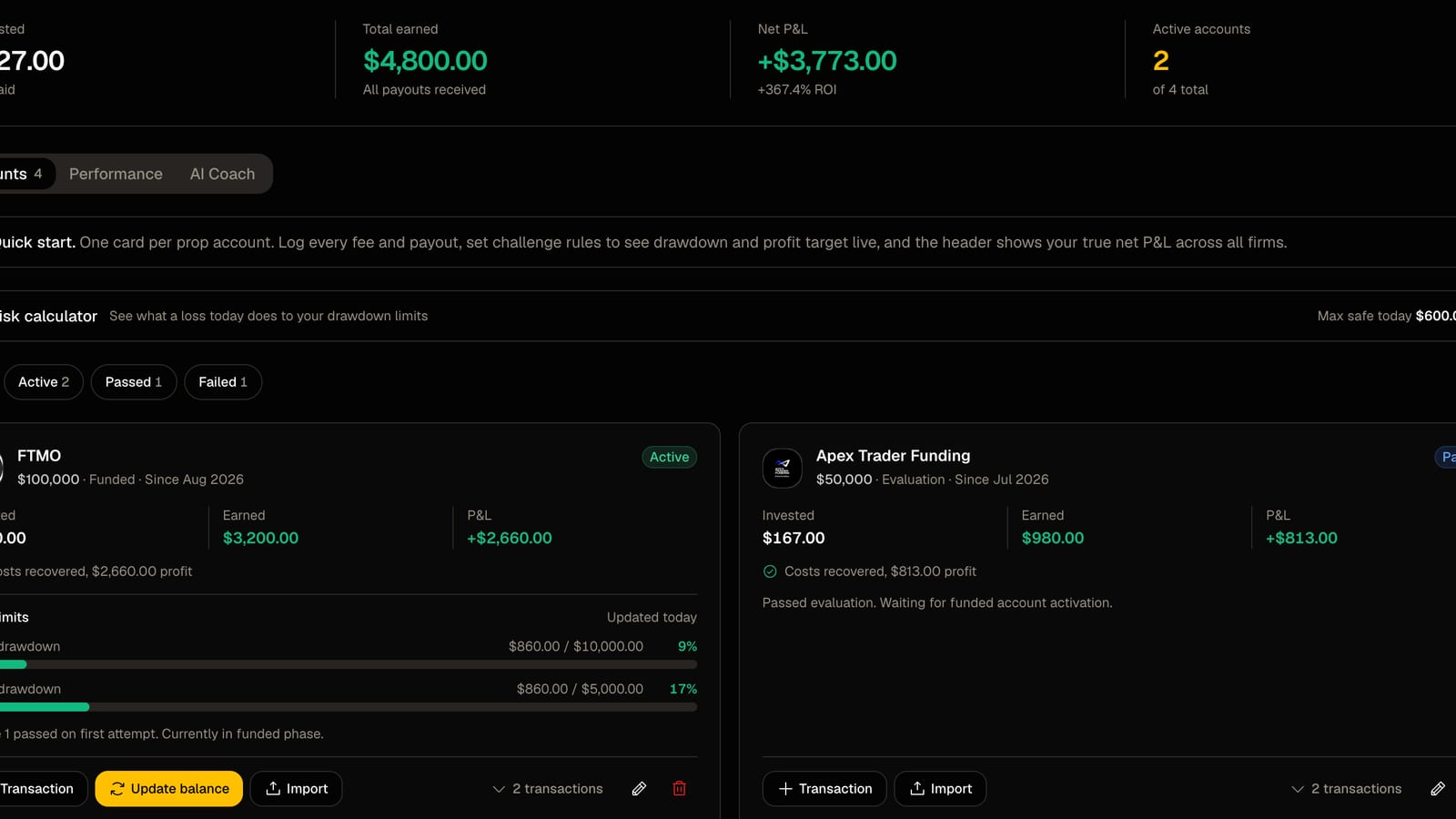
Prop firms2 min read
How to track several prop firm accounts in one place
Every fee, payout, drawdown limit and target on one screen instead of three dashboards and a spreadsheet.
Read post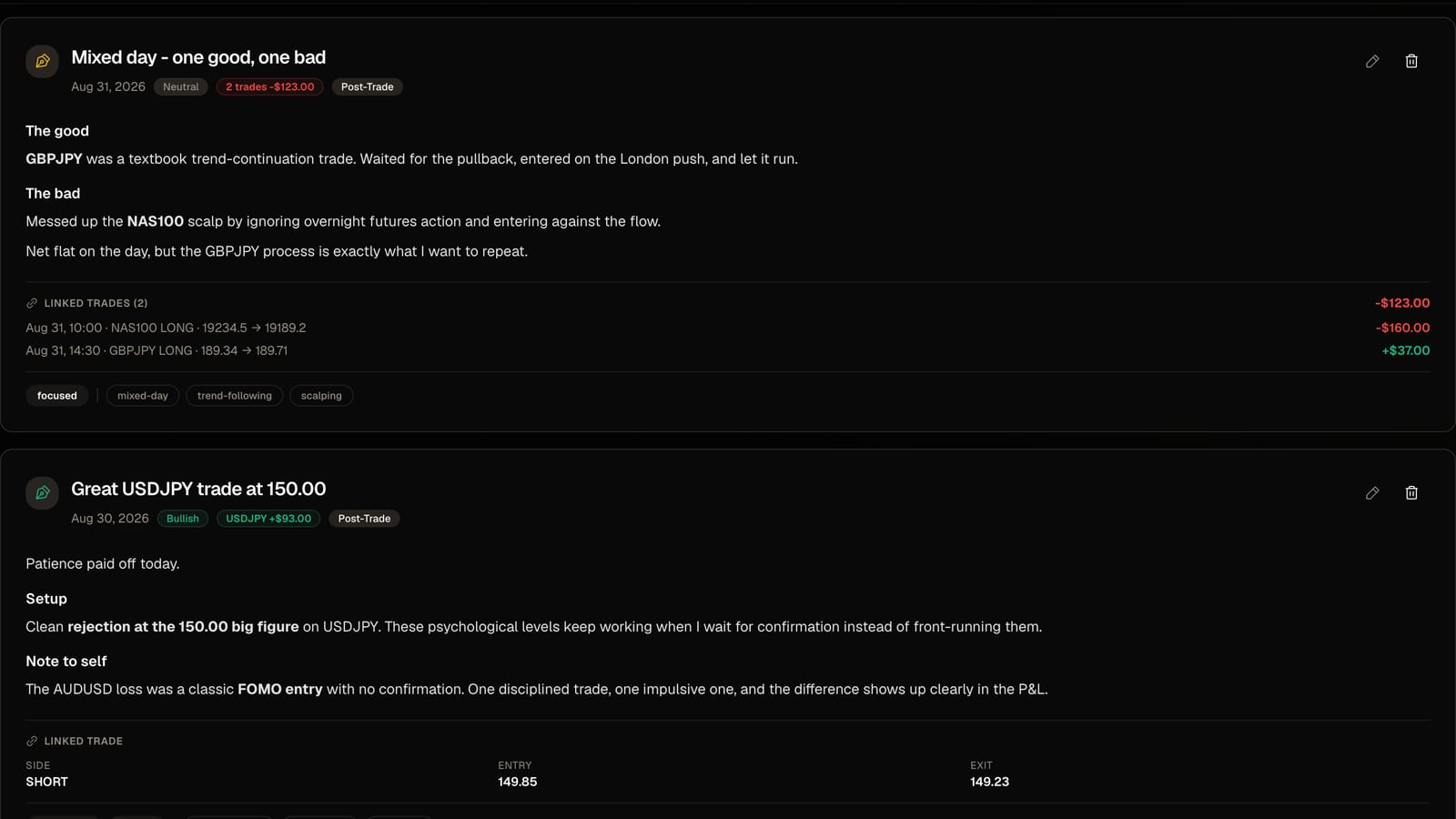
Journaling2 min read
How to keep a trading journal you actually open
Most journals die in the second week. Here is the routine that survives, and what the app does to make it shorter.
Read postTracking FTMO with FreeTradeJournal Questions
Common questions about the rules, the import, and what the journal does
Track every trade, spot what's working, and build consistency — with professional analytics, journaling, and performance tools. Free forever, no credit card required.
Trading Tools
Prop Firms
© 2026 FreeTradeJournal. All rights reserved.